
Loading
Loading
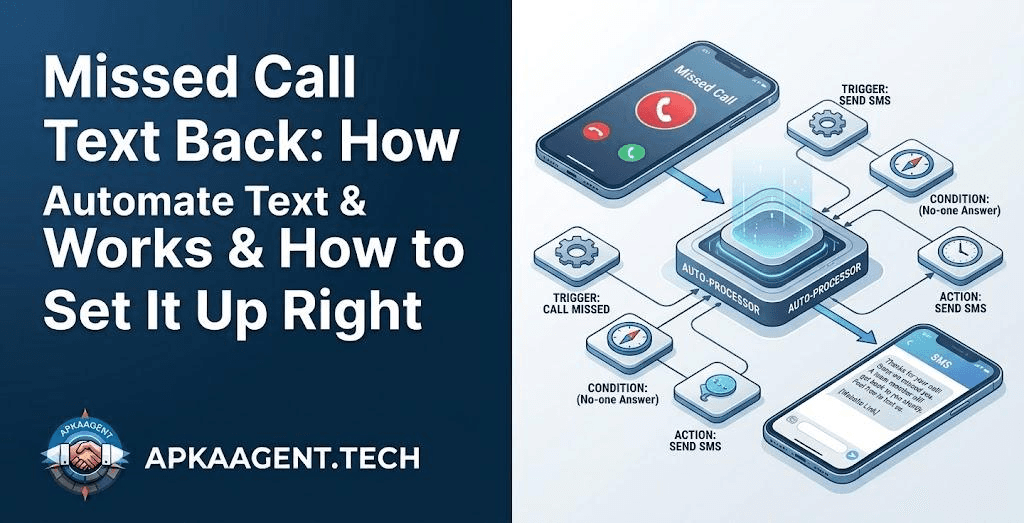
A plumber under a sink can't answer the phone. Neither can a dentist with a patient in the chair, a roofer on a ladder, or a salon owner halfway through a color appointment. The call goes to voicemail, and many callers don't leave one. They simply call the next business in their search results.
Missed call text back is one of the simplest automations a service business can set up, and one of the most practical. It doesn't require a new website, ad budget, or sales hire. It just makes sure that a missed call becomes the start of a conversation instead of the end of one.
Missed call text back is an automation that sends a text message to a caller shortly after their call to your business goes unanswered. The message acknowledges the missed call and invites the person to continue the conversation by text. Replies land in your CRM or business inbox, where your team or an AI assistant can respond.
The reason it works is simple. Texting is often easier for a caller than waiting for a callback. They can reply on their own schedule, explain what they need, and get an answer without another round of phone tag.
Many CRMs and phone platforms offer this feature. GoHighLevel missed call text back is a common example, built as a workflow triggered by call status. We cover GoHighLevel's broader automation set, including this workflow, in our guide to GoHighLevel workflows. Dedicated missed call text back software and many business phone systems offer similar functionality.
The first text sets the tone. It should sound like a person, identify your business, and make replying easy.
Clear and personal:
"Hi, this is Maria at Evergreen Landscaping. Sorry we missed your call. How can we help you today?"
For appointment-based businesses:
"Thanks for calling Lakeside Dental. We're with a patient right now. Reply here with what you need, or book a time online and we'll confirm shortly."
After hours:
"Thanks for calling Summit HVAC. Our office is closed, but we'll reply first thing in the morning. If this is an emergency, reply URGENT and we'll call you back as soon as possible."
Only include an emergency option if someone is actually available to respond to it. A promise you can't keep is worse than no promise.
Avoid messages that sound automated ("Your call is important to us"), messages without a business name, and messages that immediately push a sales offer.
The basic version sends one text and waits for a human. A more capable version uses an AI assistant to continue the conversation. When the caller replies, the AI can answer common questions about hours, service areas, and pricing ranges you've approved, collect details about the job, and offer appointment times from your calendar.
This works well for predictable questions. It needs firm limits for everything else. The AI should not quote prices you haven't approved, promise availability it can't confirm, or try to handle complaints or emergencies. Those conversations should go to a person immediately, with the conversation history attached.
Good AI setups also tell the customer they're talking with an automated assistant when that's the case. Transparency builds more trust than pretending.
Business text messaging in the US comes with rules, and missed call text back is no exception.
A2P 10DLC registration. Carriers generally require businesses sending texts through standard 10-digit phone numbers to register their brand and messaging use case. Unregistered traffic may be filtered or blocked. Complete A2P 10DLC registration before launching any SMS automation, and describe your use case accurately.
Consent and opt-outs. Replying to someone who just called you is different from sending marketing messages to a purchased list, but you should still treat consent seriously. Honor opt-out replies such as STOP immediately, and don't add missed callers to promotional campaigns without proper consent. The Telephone Consumer Protection Act and state laws regulate automated texting, so review your process with a qualified attorney if you plan to expand into marketing messages.
Landlines. Some callers use landlines that can't receive texts. Your system should handle failed messages without errors, and your team should still return important calls.
Texting existing customers like strangers. If a known customer calls, the message can be more personal or route straight to their account manager. Use your CRM data to tell new and existing callers apart.
No follow-up when nobody replies. A single text is often enough, but a missed call from a high-value lead may justify a callback task for your team. Don't send repeated texts to someone who hasn't responded.
Replies that go unanswered. The automation only starts the conversation. If replies sit in an inbox for hours, the benefit disappears. Assign ownership and set up notifications.
Texting spam calls. Robocalls and spam numbers will trigger the automation too. Filtering known spam numbers, where your platform allows it, reduces wasted messages.
Wrong number setup. Calls forwarded through several systems sometimes lose missed-call status. Test by calling your own number from a personal phone and letting it ring out.
Lead response time and lead capture are the main metrics to watch. Track how many calls go unanswered each week, how many missed callers reply to the text, how many of those conversations become booked appointments or quotes, and how quickly your team responds to replies.
Comparing those numbers against the period before launch gives you an honest view of the value, without relying on industry averages that may not apply to your business.
For a business already using GoHighLevel or a similar CRM, a basic missed call text back workflow can be configured quickly once SMS registration is complete. The more involved work is in the details: separating new and existing callers, after-hours logic, AI replies with safe limits, routing to the right team member, and connecting everything to your pipeline.
ApkaAgent builds this kind of automated SMS follow-up as part of our CRM automation service, including conversational AI, CRM integration, and ongoing maintenance. For a wider view of how automation fits into daily operations, read our article on what AI automation actually changes in a business. You can learn more about our team on the About Us page.
Missed call text back won't replace answering the phone, but it gives every unanswered call a second chance. Keep the message short and human, register your SMS properly, respond quickly to replies, and use AI only for the questions it can answer safely.
If you want missed calls handled properly inside your CRM, contact ApkaAgent for a free consultation.
Most businesses send the text within about a minute of the missed call, while the caller is still thinking about their request and may not have called a competitor yet. Sending it instantly can occasionally arrive before the call fully disconnects, so a short delay of 30 to 60 seconds often feels more natural.
Texting someone who just called your business is generally treated differently from unsolicited marketing, but rules still apply. Register your messaging through A2P 10DLC, identify your business, honor opt-out requests like STOP, and don't add callers to marketing campaigns without proper consent. Because state and federal rules vary, review your process with a qualified attorney.
Often, yes, but it depends on your phone provider. Some systems support the feature directly. In other cases, businesses port their number into their CRM's phone system or forward calls through a tracking number. Test carefully, because call forwarding can sometimes prevent the system from detecting a missed call correctly.
AI can handle common questions like hours, service areas, and booking, which helps when your team is busy. It should have strict limits: no unapproved pricing, no promises about availability, and immediate handoff for complaints or emergencies. Let customers know when they're chatting with an automated assistant, and review conversations regularly to improve accuracy.
Landlines typically can't receive text messages, so the text will fail to deliver. A well-configured system logs the failure without causing errors, and your team should still review missed calls from important numbers and return them manually. This is one reason missed call text back should support, not replace, a callback process.
We'll set up missed call text back the right way, with compliant SMS registration, safe AI replies, and a clean handoff to your team.
Talk to Us